How to Check if a Business Name Is Available
A step-by-step checklist for checking business name availability across domains, trademarks, company registers, social handles, search results, and app stores.
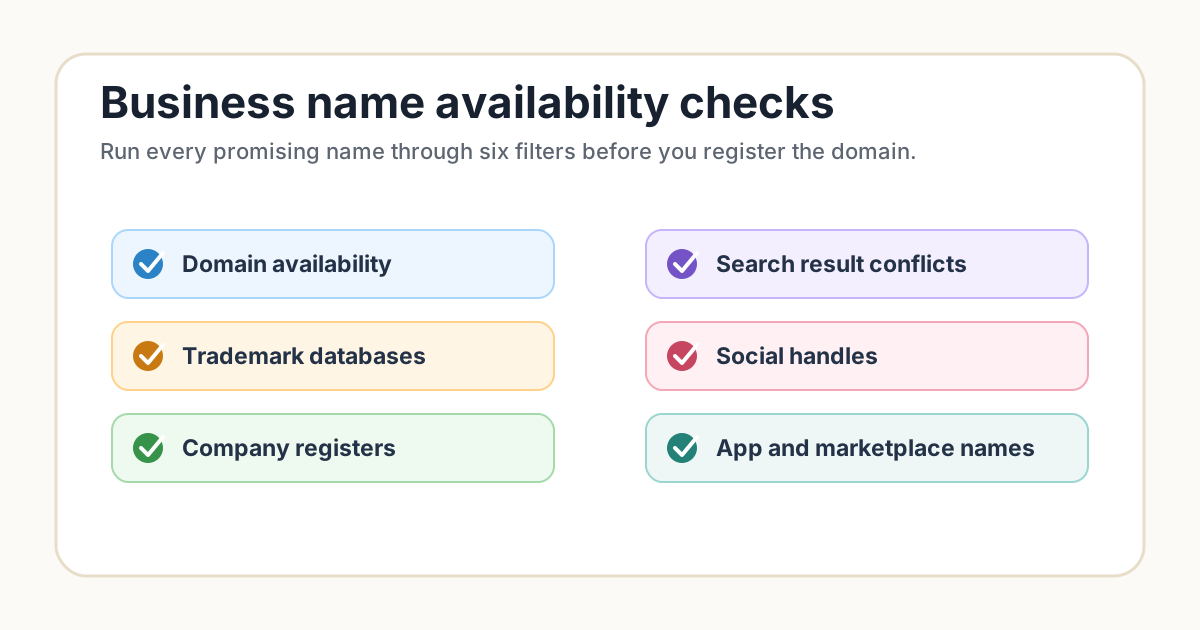 The six availability checks every serious business name should pass before launch.
Finding a name you like is only half the job. Before you print the logo, buy ads, or announce the company, you need to check whether the name is actually usable.
Business name availability is not one single lookup. A name can be available as a domain but risky as a trademark. It can pass a state company register but be confusingly close to a competitor in search results. It can be legally usable but awkward because every social handle is taken.
Use this checklist to reduce surprises before you commit. It is not legal advice, but it will help you spot obvious problems early.
Start With Domain Availability
The domain is usually the fastest signal. If your exact name is available in a trusted extension, you have more flexibility. If every obvious domain is taken, you may need a different name, modifier, or extension.
Check:
- Exact match
.com - Relevant alternatives such as
.ai,.io,.co,.app, or your country domain - Common misspellings
- Hyphenated versions, mostly to understand risk
- Similar domains that could confuse users
You can start with DomainRapids to create and check options quickly. For registration data, use ICANN Lookup to see current public domain records where available.
Do not judge only by "available" or "taken." Judge by whether a real customer can remember, type, and trust the domain.
Search Trademark Databases
Trademark checks matter because a name can be unavailable in your category even if the domain is free. The risk is highest when another company uses a similar name for similar goods or services.
Start with the official databases for your target markets:
- United States: USPTO Trademark Search
- European Union: EUIPO eSearch plus
- International screening: WIPO Global Brand Database
Search the exact name, close spellings, plural versions, and words that sound similar. If the name will matter to investors, partners, or a national launch, ask a trademark attorney to review the finalist before you launch.
Check Business Entity Registers
Company formation rules are separate from trademarks and domains. Your local authority may block an entity name that is too similar to an existing registered business, even when the brand could still be usable in another context.
Search the business register for the jurisdiction where you plan to form the company. If you will operate in multiple countries, check the markets that matter most before you invest in branding.
This is also a good moment to decide whether the legal entity name needs to match the public brand. Many companies use one legal name and a simpler trade name.
Review Search Results
Search engines reveal practical conflicts that databases can miss. Search the exact name in quotes, then search without quotes. Add your category, city, or industry terms.
Look for:
- Competitors with similar names
- Negative associations
- Products in adjacent categories
- Old projects that still rank
- Acronyms with confusing meanings
- News stories that could affect trust
If the first page is crowded with unrelated but powerful results, the name may be harder to own in search. That does not automatically disqualify it, but it raises the amount of brand investment needed.
Check Social Handles and Profiles
You do not always need the exact same handle everywhere, but you should avoid a chaotic identity. A clean social pattern makes the brand easier to recognize and reduces customer confusion.
Check the platforms that matter for your audience. For many businesses that means LinkedIn, X, Instagram, TikTok, YouTube, Facebook, GitHub, Product Hunt, and relevant marketplaces.
If the exact handle is taken, try consistent modifiers:
getbrandusebrandbrandhqbrandappbrandteam
Avoid modifiers that make the brand sound smaller, temporary, or unofficial.
Check App Stores and Marketplaces
If you plan to ship software, courses, templates, plugins, physical products, or a mobile app, search the relevant stores. App store conflicts can create support confusion even when the legal situation is manageable.
Check:
- Apple App Store
- Google Play
- Chrome Web Store
- Shopify App Store
- WordPress plugin directory
- GitHub
- Amazon or Etsy if you sell products
You are looking for confusing overlap: same name, same audience, similar promise.
Score Each Name Before Deciding
Create a simple table with each finalist and score it from 1 to 5 on:
- Domain quality
- Trademark risk
- Search uniqueness
- Social handle fit
- Category clarity
- Brand memorability
The best name is rarely perfect. The best name is usually the one with the strongest combination of brand fit and manageable risk.
Frequently Asked Questions
Does an available domain mean the business name is available?
No. Domain availability only means the domain can likely be registered. It does not clear trademark, company register, or marketplace conflicts.
Should I buy every domain extension for my name?
Usually no. Start with the primary domain and the most obvious defensive registrations, such as common misspellings or key extensions. Buying dozens of domains can become expensive without adding much protection.
What if the exact social handle is taken?
A consistent modifier can work. Use the same pattern across platforms when possible, and make sure the profile name and website link clearly match your brand.
When should I talk to a trademark attorney?
Talk to one before a serious launch, fundraising announcement, major ad spend, or rebrand. Early legal review is cheaper than changing names after customers know you.
Next Step
If your shortlist is still too large, use Business Name vs Domain Name to decide which names are strategically strongest before you run deeper checks.