How Long Should a Domain Name Be?
Find the ideal domain name length for startups and small businesses. Learn when short domains help, when longer names work, and how to test readability.
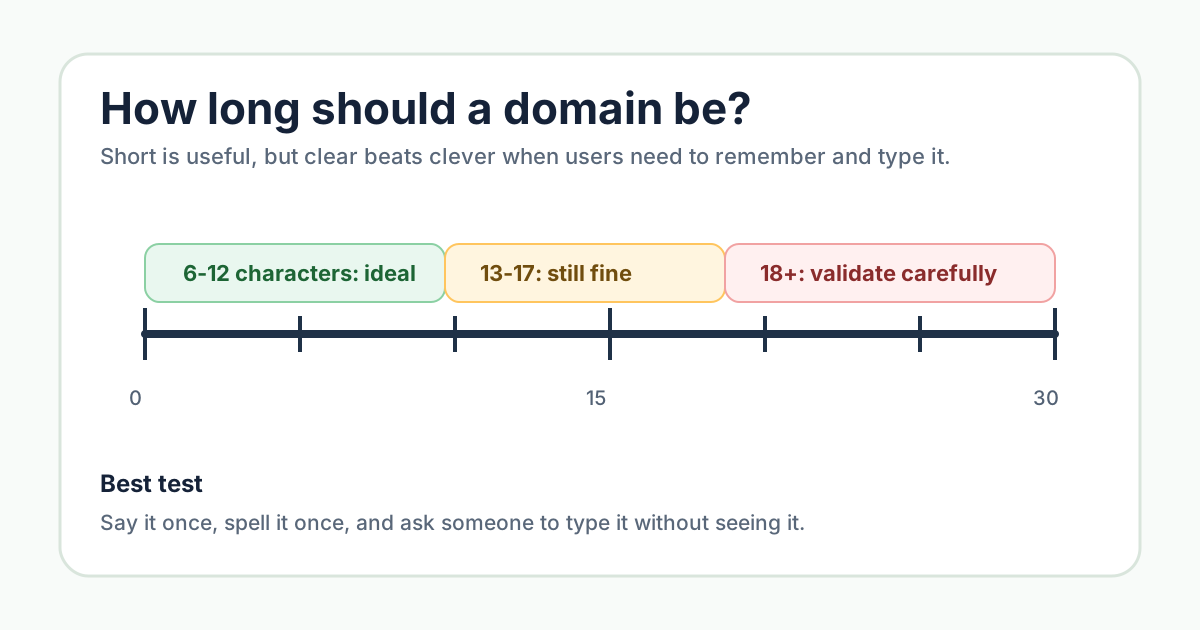 A practical ruler for judging whether a domain name is easy enough to remember and type.
Short domains are useful, but short is not the whole goal. A domain name should be memorable, clear, easy to say, and hard to mistype. Sometimes a 14-character domain beats a 7-character domain because real people can actually understand it.
As a practical rule, aim for 6 to 14 characters before the extension when you can. Domains between 15 and 17 characters can still work if the words are familiar and the spelling is obvious. Once you go past 18 characters, you need a very good reason.
Why Length Matters
Longer domains create more chances for friction:
- More typing errors
- More awkward verbal sharing
- More line breaks in ads and profiles
- More confusion in email addresses
- More room for users to forget a word
But ultra-short domains can create a different problem. If the name is too abstract, abbreviated, or expensive, it may be less useful than a slightly longer name with clearer meaning.
The goal is not the shortest possible string. The goal is the easiest domain to use.
The Best Length Ranges
Use these ranges as a starting point:
- 5 characters or fewer: rare, expensive, and often abstract.
- 6 to 12 characters: usually ideal for brandable names.
- 13 to 17 characters: workable when made of clear words.
- 18 to 24 characters: acceptable for descriptive or local businesses, but test carefully.
- 25 or more characters: usually too long unless search clarity is more important than brand memory.
A domain like northline.com is easy because it is short and made of familiar words. A domain like nrlxq.io is short, but not easy. A domain like austinpetinsurance.com is long, but it may still work for a narrow lead-generation site because the intent is clear.
Count Words, Syllables, and Confusion
Character count is only one metric. Also check:
- Word count: One or two words is usually best.
- Syllables: Two to four syllables is often easiest to remember.
- Spelling risk: Avoid words people commonly misspell.
- Soundalikes: Watch for names that sound like other words.
- Letter ambiguity: Be careful with
l,i,o, and0. - Repeated letters: Names like
presssynccan lose letters when typed.
The domain should survive being spoken in a podcast, sales call, or coffee shop conversation.
The Radio Test
The radio test is simple: say the domain out loud once, then ask someone to type it without seeing it.
If you need to explain the spelling, the name may be too fragile. A little explanation is fine for a premium brand, but repeated explanation becomes expensive over time.
Try this with each finalist:
- Say the company name.
- Say the domain once.
- Ask the person to write it down.
- Compare what they wrote with the actual domain.
- Ask what they think the company does.
If they misspell it or misunderstand the category, the domain needs more work.
When Longer Domains Work
Longer domains can work when they are built from plain words and match high-intent search behavior.
They are common for:
- Local service businesses
- Niche directories
- Appointment-based services
- Exact product categories
- Campaign landing pages
- Defensive redirects
For example, seattlewindowrepair.com is not elegant, but it is clear. It may work for local search and paid ads. The same structure would feel weak for a venture-backed SaaS product that needs to become a memorable brand.
When Short Domains Fail
Short domains fail when they trade clarity for novelty. Avoid names that are short only because they remove vowels, use random letters, or force a spelling that users will not guess.
Be careful with:
- Missing vowels
- Unnecessary numbers
- Hyphens
- Obscure abbreviations
- Hard-to-say invented words
- Trendy endings that age quickly
If the name looks good in a logo but fails in conversation, it is not a strong domain.
How to Compare Finalists
Create a quick scorecard:
- Characters before the extension
- Number of words
- Number of syllables
- Obvious spelling from speech
- Category clarity
- Extension trust
- Email readability
Then test the top options in DomainRapids and compare the full domain, not just the brand word.
Frequently Asked Questions
Is a shorter domain always better?
No. Shorter is better only when the name is still readable, memorable, and trustworthy. Clear beats clever.
Are hyphens bad in domain names?
Usually, yes. Hyphens are easy to forget and awkward to say aloud. They can work for narrow SEO or campaign uses, but they are rarely ideal for a primary brand domain.
How many words should a domain have?
One or two words is usually best. Three words can work for descriptive local or service domains. Four or more words should be rare.
Should I abbreviate my business name in the domain?
Only if the abbreviation is already familiar to your audience. Random initials are hard to remember and can reduce trust.
Next Step
If you are choosing between clear and memorable options, read Brandable vs Keyword Domains before making the final call.